Emma’s forgiveness of Edwin Fairley
A Woman of SubstanceEmma Harte’s forgiveness of Edwin Fairley ends a family vendetta rooted in generations of thwarted love. Jim Fairley delivers Edwin’s final appeal after Emma has already agreed to approve Jim and Paula’s marriage; the disclosure changes the meaning of that approval, turning a personal reconciliation into the close of a long Harte–Fairley history of grief and resentment.
The message Jim brings
Jim first explains why he has come to speak with Emma. Edwin had confided in him and entrusted him with a stone for her, which Jim wanted her to have even though she had already relented about his relationship with Paula of her own accord. Emma says she has no photograph of her mother and will treasure the stone. Her response establishes that the gift is not merely a keepsake: it gives the conversation a connection to the family past Emma is about to confront.
Jim then recounts Edwin’s account of the two families’ history. Edwin described a recurring attraction between Harte women and Fairley men, repeatedly frustrated by circumstances of birth. He believed the pattern had brought heartbreak to three generations, spanning almost a hundred years, and urged Emma to let it end with the younger couple. His request was specific: he wanted her to allow Jim and Paula the happiness denied to Emma and Edwin, and to the earlier generation represented by Emma’s mother and Edwin’s father. The marriage would, in his view, join the families where earlier love had failed to do so.
Emma is struck by the delay. Edwin has been dead for three months, and she asks why Jim did not come sooner. Jim explains that he had intended to speak in January, but Emma and Paula unexpectedly left for America; after their return, Emma fell ill. He had considered approaching her again a few weeks before, but thought her too preoccupied, especially so soon after her illness. Then Emma herself told him she would approve the marriage if he and Paula still felt the same way. Her independent decision had anticipated Edwin’s appeal without her knowing it.
Edwin’s final appeal
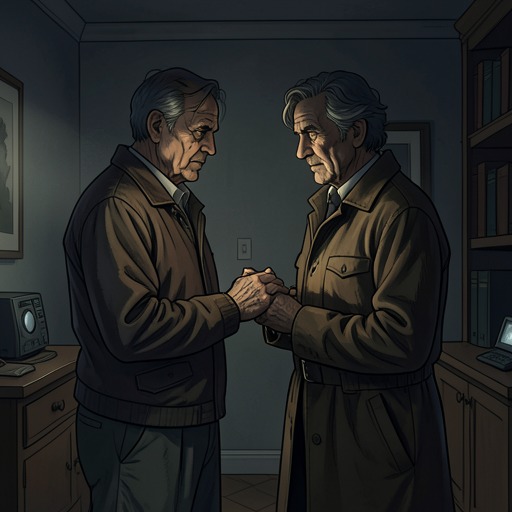
Jim says Edwin had entrusted him with another request: he was to ask Emma’s forgiveness, particularly on Edwin’s behalf, for what the Fairleys had done to her. To convey the depth of that plea, Jim kneels at Emma’s feet and takes her hands. This gesture is Jim’s, but the words and apology are Edwin’s, carried across the distance between the living and the dead. Edwin had wanted Emma to know that he had never stopped loving her and that his rejection of her in the rose garden had left a lasting wound in his own life.
The account makes clear that Edwin’s appeal had become urgent as he approached death. He repeatedly made Jim promise to deliver it and feared that he would lie in an unquiet grave if Emma did not forgive him. Jim says he assured Edwin that Emma would forgive, and eventually calmed him. Edwin then slept briefly; when he woke, his attention seemed fixed beyond the room. Jim understood that he was slipping away. Edwin smiled, called Emma by name, and said he was going back to the Top of the World before dying peacefully in Jim’s arms. His last words connect his departure to the phrase associated with him, while the timing gives his appeal an ending that he could not secure for himself in life.
Emma’s recognition and forgiveness
Emma responds with tears held back and repeats her pity for Edwin. She considers that he may have suffered more than she did. Jim asks directly whether she forgives the Fairleys, and especially his grandfather. Emma answers that she forgives all of them, most especially Edwin. The scope matters: her answer does not settle only a private grievance between former lovers but releases the wider family conflict that has shaped their descendants’ choices.
As she touches Jim’s face affectionately, Emma inwardly sees Edwin kneeling before her. She recognizes that she spent a lifetime seeking revenge for his rejection, yet concludes that his own conscience had already made him suffer for it. She recalls that he seemed relieved when she took the Yorkshire Morning Gazette from him and now understands that relief as a sign that he wanted her to win: the business defeat had coincided with the end of the vendetta. Emma’s new understanding does not erase the pain or effort of her pursuit; it reveals that the revenge she believed she had to impose had also been sustained by Edwin’s guilt.
Reconciliation and consequence
Jim’s disclosure transforms Emma’s approval of his and Paula’s marriage into a deliberate break with the inherited pattern. Her earlier decision had already opened the way for their happiness, but hearing Edwin’s appeal lets her understand that choice as the answer to a plea made too late for him to witness. The younger couple need not repeat the thwarted relationships of the preceding generations.
The scene closes on practical composure rather than a public display of grief. When Jim anxiously asks whether she is all right, Emma says she is and asks to borrow his handkerchief. She does not want to go downstairs with tears on her face to announce the engagement. That transition—from the intimate recounting of Edwin’s death to the impending family announcement—makes forgiveness consequential: it is expressed not only as a private absolution but as room for the next generation to begin its marriage without carrying the old feud forward.